

We highly recommend you read our beginner guide before starting. It explains the essentials, helps you avoid expensive crashes, and prevents the common (and expensive) mistakes almost every beginner makes.
Without question, the radio control flying hobby has to be one of the most exhilarating, addictive, fulfilling and rewarding pastimes you can have. I can personally assure that, from years of aeromodelling experience.
So to give you a rock-solid start to your new hobby, our Beginner’s Guide To Flying RC Airplanes e-book is packed with concise, easy to digest information guaranteed to save you valuable time, money and trouble.
Why buy this e-book?
The short answer: Because at only $9.99, it’s a very small price to pay for learning how not to crash your new plane on its first flight!
A better answer: if you want to fly RC planes, a solid understanding of your new hobby is what you need. As a newcomer, The Beginner’s Guide To Flying RC Airplanes won’t overload you with all the unnecessary stuff that you don’t need to know right now. It gets right to the point and answers all the ‘getting started’ questions that you’re ever likely to have.
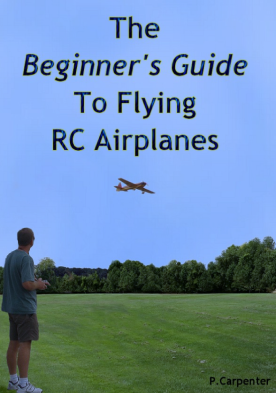
Start the smart way: read before you buy or fly 👇
The Beginner’s Guide To Flying RC Airplanes is a 139-page, easy-to-read e-book for complete newcomers. It explains what to buy, setting it up, where to fly and how to avoid mistakes that wipe out so many beginners.
$9.99
(30 day money-back guarantee)E-book topics include...
Here is a list of just some of the many topics we cover within the book – all made simple and easy to understand, regardless of experience:
- Understanding RC systems & how they control your plane.
- What you need to know when choosing your first plane.
- Preparing your plane for flight.
- Finding somewhere suitable to fly.
- The essential pre-flight checks you need to know.
- Complete flight school to get you airborne safely (take-offs, flying & landing).
- How to fly some basic aerobatics.
- How to deal with a crash.
- ...and more!
So what’s in The Beginner’s Guide?
Below I have added a few little snippets from the e-book:
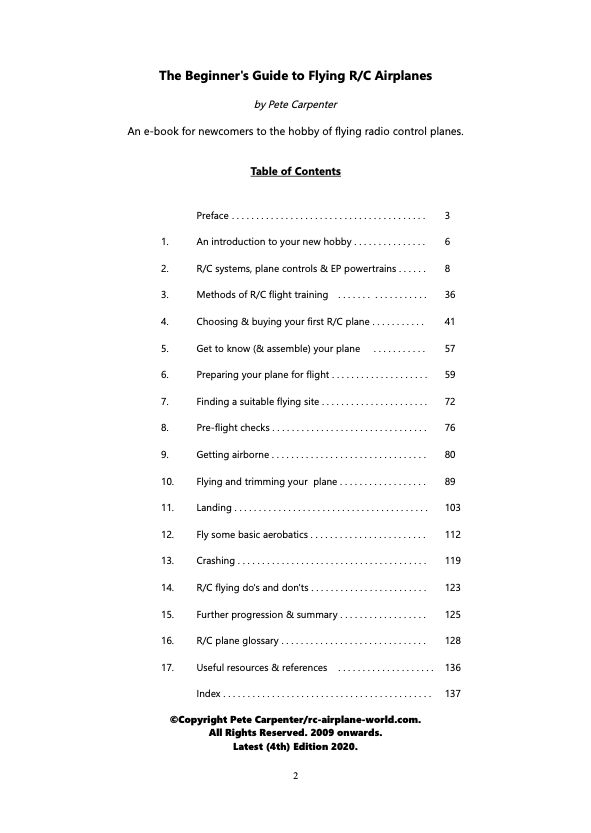
Contents
- Chapter 1: An introduction to your new hobby
- Chapter 2: R/C systems, plane controls & EP powertrains
- Chapter 3: Methods of R/C flight training
- Chapter 4: Choosing & buying your first RC plane
- Chapter 5: Get to know (& assemble) your plane
- Chapter 6: Preparing your plane for flight
... and 11 more chapters!
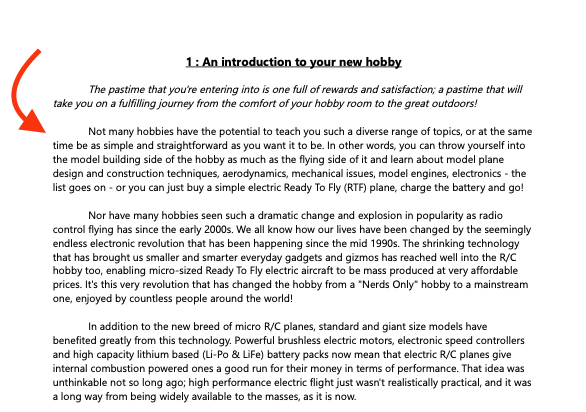
Introduction
Not many hobbies have the potential to teach you such a diverse range of topics...
In other words, you can throw yourself into the model building side of the hobby... Or you can just buy a simple electric Ready To Fly airplane, charge the battery and go!
Transmitters
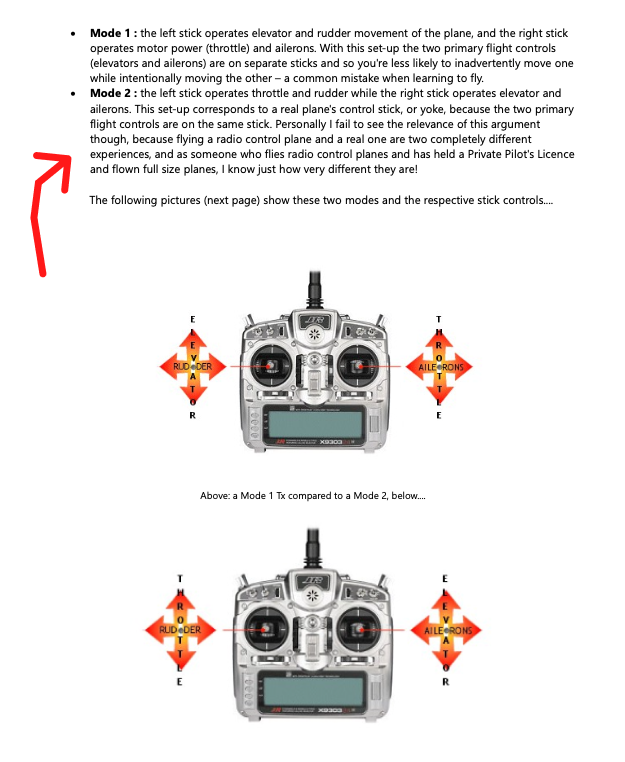
So then, what are the differences between transmitter modes? They are….
Mode 1: the left stick operates elevator and rudder...
Mode 2: the left stick operates throttle and rudder...
Elevators
Elevators are the most important of all control surfaces... Up elevator will reduce the speed if engine power is not applied...
...while down elevator will initiate a dive and hence the airspeed will increase, as gravity kicks in.
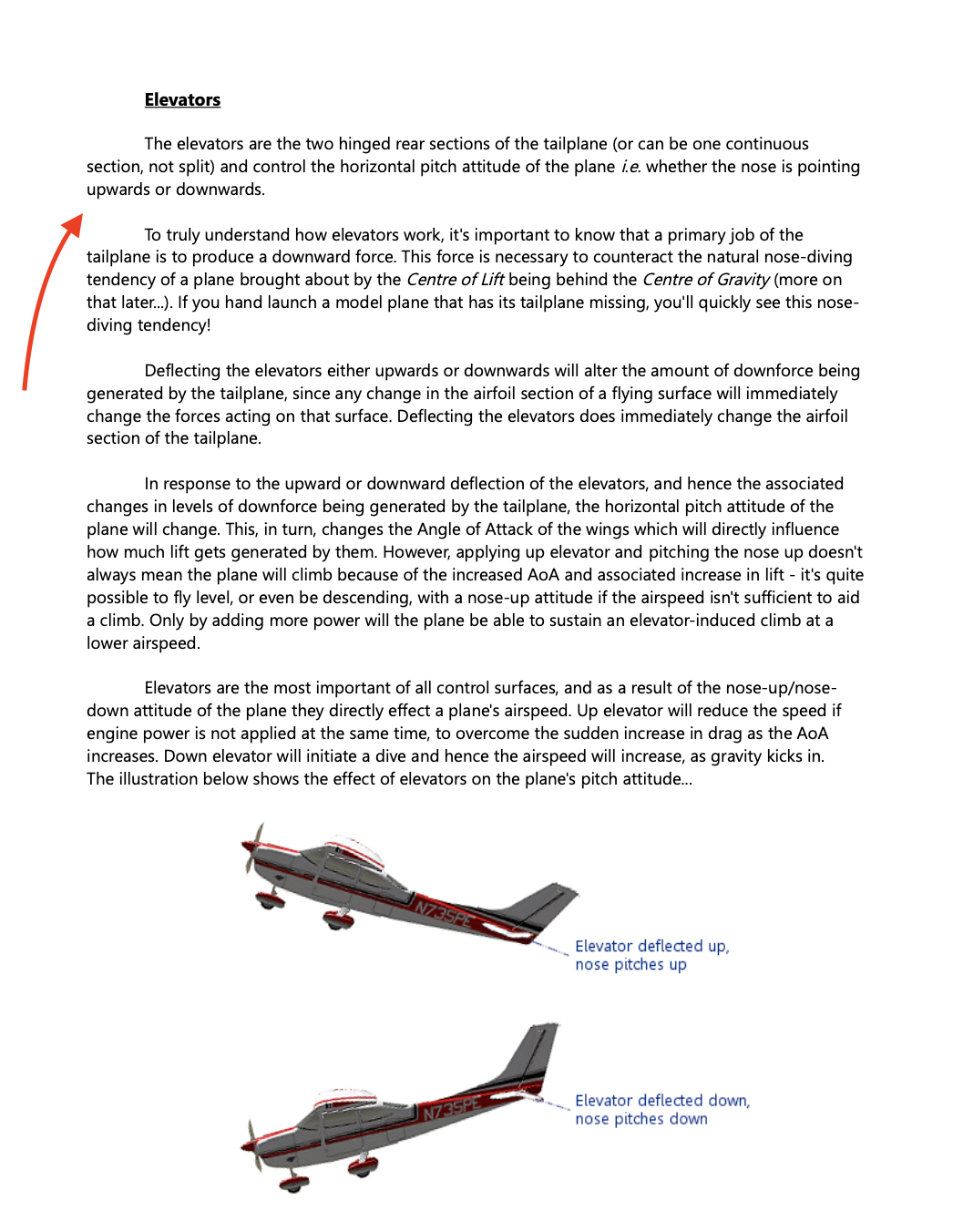
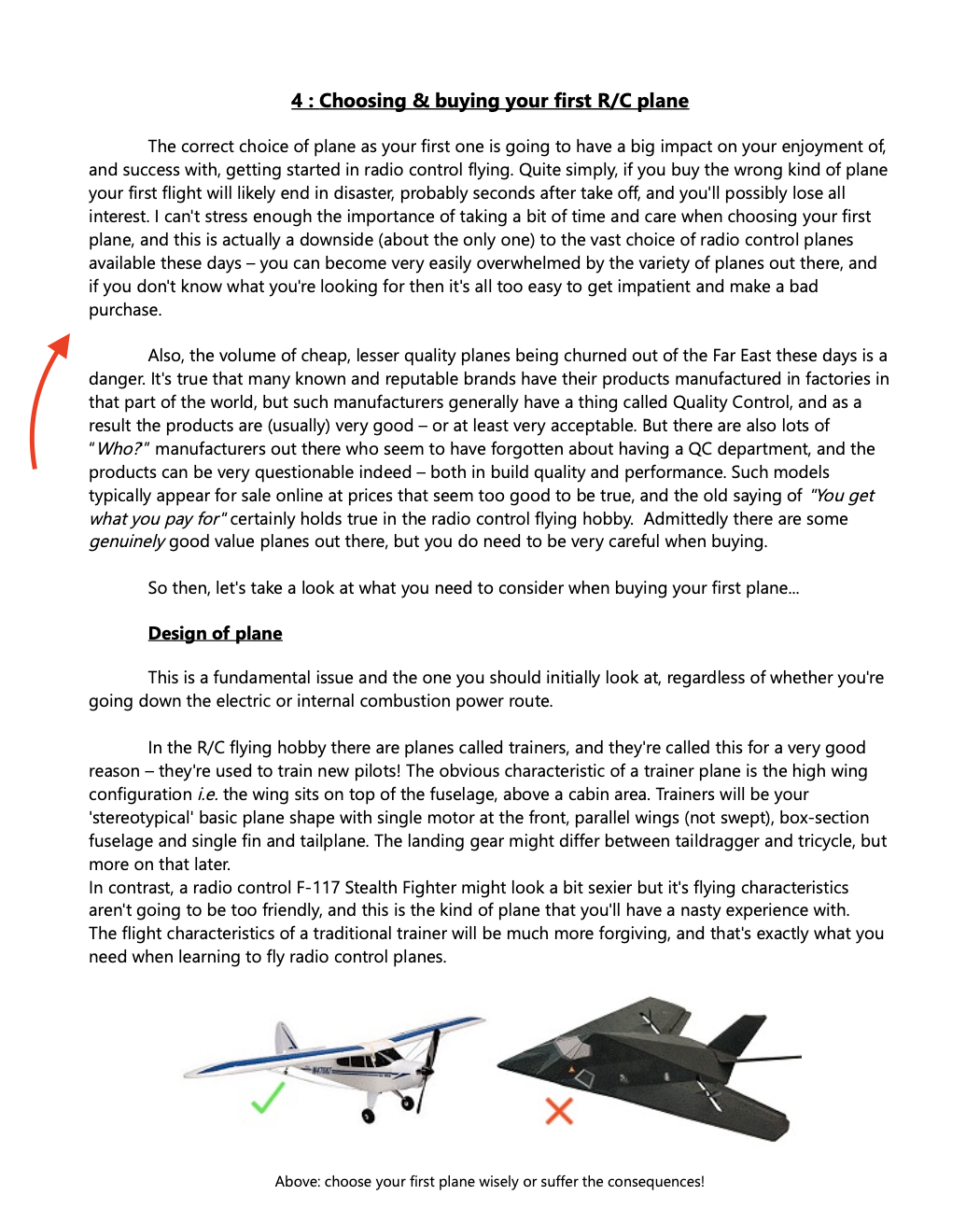
Buying a plane
The correct choice of RC airplane as your first one is going to have a big impact on your enjoyment.
Quite simply, if you buy the wrong kind of plane your first flight will likely end in disaster...
Don't just take it from us... listen to our readers.
"Hi Pete, Just finished your book and was totally impressed... I'm certainly glad I have read your book before dashing out and buying a plane. Gratifyingly, I'm now more eager to get started."
"Thanks a million! Your e-book is very informative and written with great clarity. On my recommendation, my brother purchased your book and is reading it with zeal."
"I wish I started with your airplane ebook first... perfect job thank you. I wish you and John would write more books to document your knowledge for novices like me."
"I am that quintessential beginner... I can't imagine anyone in my position NOT finding exceptional value in going through your well-written eBook before taking even the first step."
"Just wanted to say I bought your guide and think it's going to help a lot. After a couple of minor initial launch crashes... after reading this I can now see where I'm going wrong."
"Upstate RC Flight Training will be using this as our main instruction manual; teaching with this manual will make things more understandable for our students."
Don’t like it? Get your money back – no questions asked.
The Beginner’s Guide To Flying RC Airplanes e-book is a very genuine and original resource for anyone looking at getting in to flying radio control planes.
If, after you’ve read it, you’re dissatisfied with the information contained within it – please send us a message and we will sort out a refund.
Please don’t ask for a refund if you thought you were buying a hard copy book but then downloaded the e-book. I cannot make it any clearer throughout this page that this product is an e-book!
Start reading right away 👇
The Beginner’s Guide To Flying RC Airplanes is a 139-page, easy-to-read e-book written for complete newcomers. We highly recommend that before you do anything, you read our beginner guide.
📖 Buy Now - $9.99