

How Electric RC Airplanes Changed The Hobby
Without doubt electric rc planes (Electric Power or 'EP') have been responsible for bringing a huge number of people in to the radio control flying hobby over the years, and it's easy to see why.
When I started creating RC Airplane World back in 2002, Ready To Fly ('RTF') electric planes were only just becoming readily available and affordable. Just a few companies were producing the foam RTFs that we've come to know and love, and many traditional aeromodelers saw them as a flash-in-the pan novelty!
But electric power had indeed truly arrived and the relative low cost and convenience of an EP Ready To Fly plane proved irresistible to the beginner pilot. At the time it was hard to imagine just how popular, and advanced, such rc planes would become, but with hindsight it's not at all surprising.
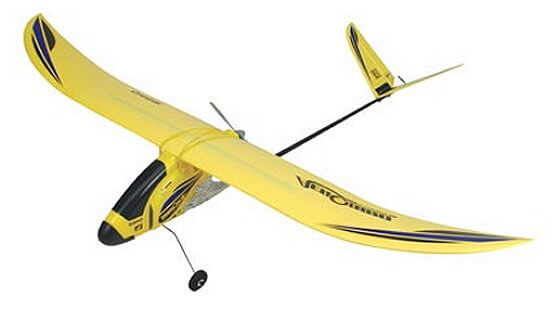
Above: an early pod-and-boom style EP RTF.
Instant Foamie Hits!
Manufacturers quickly recognised a keen market and it didn't take long for RTF electric planes to become established products in the hobby. EP trainers particularly found their own niche.
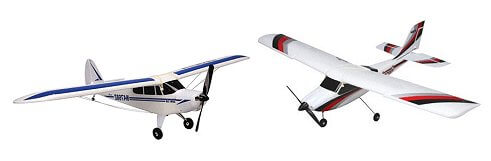
Horizon Hobby's Super Cub and Apprentice 15e quickly became two
very popular electric rc trainers.
Foam RTFs soon became widely available, in varying quality, and various manufacturers started pushing the boundaries to see just what they could produce. It didn't take long for companies such as Horizon Hobby®, well established in the radio control car world, to start producing hobby-grade quality airplanes and helicopters under various brands such as HobbyZone®, ParkZone® and E-flite®.
Multiplex, a German company, was also quick to jump on the band wagon, and Megatech was another US company producing a range of electric RTF planes. Whilst the latter has come and gone, Multiplex remains a strong competitor in the general radio control industry.
Along with known brands, many unknown "Who??" companies, typically based in the Far East, also saw a serious marketing opportunity and quickly began flooding the market with, let's face it, some airplanes of questionable quality!
Mass-produced balsa/ply electric rc airplanes were much slower to appear, simply because manufacturing times and costs were higher. Traditionally constructed RTFs were few and far between, and even now this sector of the market remains very limited in terms of choice.
The Almost Ready To Fly (ARF or ARTF) sector, however, did take off (pardon the pun...) and ARF airplanes became very widely available, as they still are.
 Of course, ARF's aren't limited to electric power, there are many intended for IC. But such is the popularity of electric power, many ARF rc planes nowadays include an EP conversion kit.
My Seagull Edge 540 (that I actually won in a prize draw!), shown right, was one such ARF meant for IC that I converted to electric power. This kind of conversion is very commonplace now, and again it just goes to show how much the hobby has progressed in recent years. Roll the clock back just a few years and converting such a plane to realistic electric power would have been a real struggle, and very expensive.
On the topic of my EP planes, my first ever one was an MFA Magicfly that I bought somewhen in the mid 1980s. Way before foam planes, brushless motors and Li-Po flight packs, it was a traditional balsa kit with a brushed motor and heavy NiCad batteries.
Its first flight lasted a few seconds because it was so heavy and underpowered. I was so disappointed that I didn't even bother rebuilding it - I returned to good ol' IC power and didn't fly another electric plane for about 20 years!
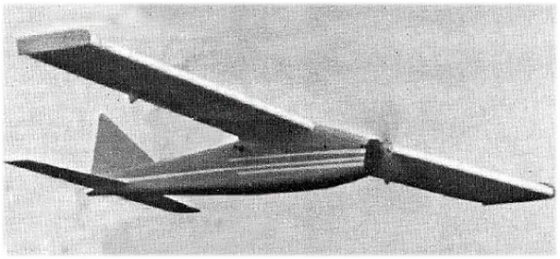
Above: stock photo of the MFA Magicfly.
Mine never flew like that!
The Power of Electric Power
In the very early days of EP (pre mass-production), electric rc airplanes were underpowered. Brushed motors and gearboxes were the order of the day, along with heavy nickel-cadmium batteries. It all made for a pretty poor powertrain setup, resulting in poor flight performance. Of course some modelers had success, but I wasn't one of them!
Thankfully those days are gone and EP planes are now at the point where they can match - even exceed - an IC powered plane in terms of flight times and performance. As a case in point, members of the UK RC Aerobatic Team have mostly swapped to electric power now!
Powerful brushless motors, electronic speed controls and lithium-based battery technology all add up to flight performance that was unthinkable from an electric powered plane not so many years ago.
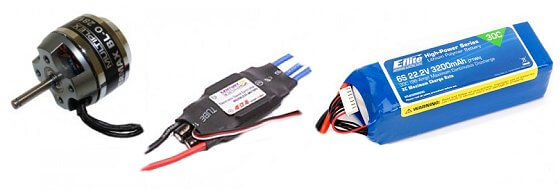
Above: the brushless motor, ESC and li-po flight pack all combine to give IC a run for its money!
Small is Beautiful?
So we know that electric power has transformed the radio control flying hobby over the years, since about the turn of the century. Wow, that really sounds like a historical statement!
EP gave the hobby a face-lift, and because electric foamie RTFs became so widely available at affordable prices, they really gave the hobby some great exposure. Wannabe aeromodelers who had previously thought of the hobby as a bit nerdy and expensive to get in to, and difficult to learn to fly, suddenly saw the opportunity that such planes gave them. Hence, radio control flying rocketed in popularity and was no longer a 'dark-art' pastime!
But another huge advantage that electronic advancements gave us was that radio controlled planes, and helicopters, could be made smaller than ever before.
 RC planes like the Champ were an instant success - they were cheap to buy, relatively easy to fly and could be flown in a much smaller space than traditionally needed.
The 16" wingspan Champ, based on the full size Aeronca Champ, was a massive seller for Horizon and brought countless new flyers in to the hobby. At the time when I had my RC Airplane World forum, I would say that the Champ was one of the most popular choices for pilots wanting to self teach.
The UMX range of micro rc planes was particularly impressive, and continues to be so. The Piper Cub, P-51 Mustang, Pitts Special, F-16 to name a few have all been subjects of this range, and I've had a few myself. They really are a lot of fun and testament to what has been achieved with electric rc airplanes.
More recently, the British company MicroAces has taken things to a whole new level with a range of incredibly detailed 1/24th scale planes, mostly from World War One. Supplied in kit form, the planes are constructed from thin Depron foam and plastic and fly on a 1S li-po cell.
I have the Sopwith Camel and it really is a work of art. Not so long ago such a product would have been nothing more than a child's dream toy!
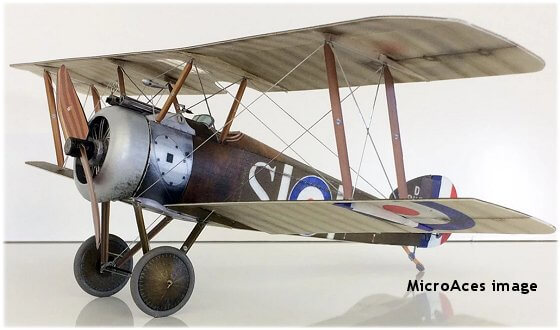
Above: the MicroAces Sopwith Camel, a 1/24th scale electric rc plane.
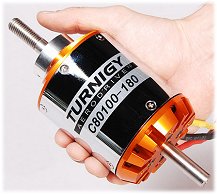 At the other end of the scale, electric motors can be bought large enough to power huge scale rc planes, so there really is no limit to what can be achieved with electric power in the rc flying hobby these days.
Imagine how big the plane needs to be to use an electric motor like this one shown!
Points to Note When Choosing Electric RC Planes
With so many EP planes available, choosing a suitable model does need some consideration.
Fortunately the process of selecting the right plane for your needs can be kept simple so long as you keep a few basic guidelines in mind.
Here are a few of those thoughts that you should remember when choosing and buying your first electric rc plane:
- Planes that are of a high wing design (i.e. the wing sits on top of the fuselage) always make the best ones to learn on because of their natural stability in the air. Typically these are trainers which you can read about here.
An alternative to this design which is also beginner-friendly is the rc electric powered glider. - An RTF (Ready To Fly) airplane is far better if you have no modelling experience; it's the best way of getting airborne with the least amount of frustration. More about RTFs here.
- Size matters! A plane with a wingspan of between 30 and 50 inches is the optimum size for learning. Much smaller and you'll have trouble seeing what it's doing, much bigger and it could be too much of a handful. That said, micro-size planes do have their place for beginners, especially if you're limited with your flying area size and/or budget.
- Check out availability of spare parts before you buy - you will need them at some time or another. A proper replacement part is a safer option than a bodged repair.
- Choose an rc plane that is durable and easily repairable after minor damage; for example, foam planes are tougher and easier to repair than balsa wood ones.
- Be aware of who you're buying from - with the increased popularity of the hobby in recent years comes the increase of unscrupulous sellers who are only interested in your money rather than your success in and enjoyment of your new hobby.
- Number of channels is important. The common options for beginners are 3 or 4. A channel is a controllable function of the plane, and essentially 3-channels makes learning easier, but 4 gives you more fun. You can read more about rc airplane controls here.
- Do research. Internet forums and video sites are great places to seek further advice, or ask at your local hobby shop or club, if you have one.
The above pointers only scratch the surface, but my e-book The Beginner's Guide To Flying RC Airplanes will answer all the questions you have about getting started in radio control flying with an electric plane.
Well hopefully this article has introduced you to EP within the hobby. Learning to fly an electric rc plane is a fun and exhilarating experience but you do need to simplify the game as much as possible in your early days.
Keeping the above points in mind should help you do that, and once you've got a few hours flying under your hat and built up some confidence then you can consider moving on to larger and faster planes.
You might also like to read about...
 The Beginner's Guide To Flying RC Airplanes.

All of this and much more is covered in our Beginner’s Guide 👇
The Beginner’s Guide To Flying RC Airplanes is a 139-page, easy-to-read e-book written for complete newcomers. It explains exactly what to buy, where to fly, and how to avoid costly mistakes.
📖 Start reading now