

RC Transmitter Modes for Airplanes
When talking about rc transmitter modes we are referring to how the transmitter is configured to control the airplane i.e. which sticks operate which controls on the plane.
Incidentally, the word transmitter is commonly abbreviated to 'TX' in the radio control flying hobby, or equally commonly just called a radio.
Four different transmitter modes exist but only modes 1 and 2 are commonly used by the majority of rc pilots around the world. Out of those two, Mode 2 is more popular.
Which mode you will fly on depends on a couple of factors:
- Buying your first RTF plane will likely determine the mode, or
- If you take one-to-one tuition you will 'inherit' the mode of your instructor's transmitter.
It's worth noting that rc transmitter modes only apply to radio gear with 4 or more channels, where each stick has both vertical and horizontal movement. The two-stick/two-channel transmitters are typically designed for left stick elevator or power control and right stick directional control (eg rudder or ailerons).
So then, the four different rc transmitter modes for radio control airplanes are illustrated below:
TX Mode 1
Stick controls are:
left stick operates elevator & rudder, right stick operates throttle & ailerons.
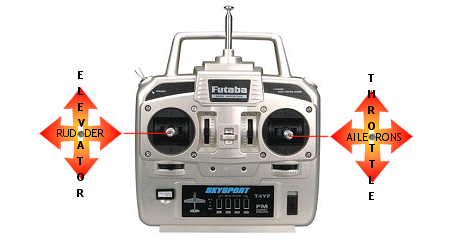
TX Mode 2
Stick controls are:
left stick operates throttle & rudder, right stick operates elevator & ailerons.
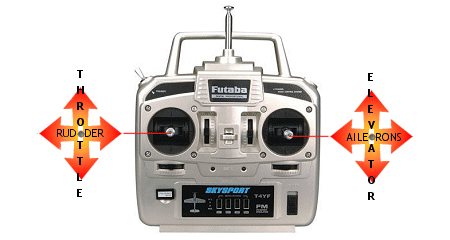
TX Mode 3
Stick controls are:
left stick operates elevator & ailerons, right stick operates throttle & rudder.
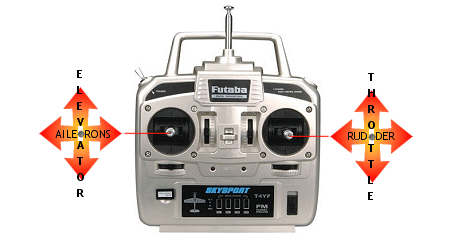
TX Mode 4
Stick controls are:
left stick operates throttle & ailerons, right stick operates elevator & rudder.
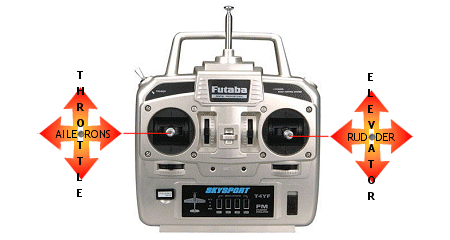
As you can see, mode 3 is the opposite to mode 2 and mode 4 is the opposite to mode 1, giving complete right handed/left handed user options.
Pros and Cons of Each TX Mode
No mode is better or worse than another one, but there are pros and cons to each configuration.
Take mode 1 for example; the two primary controls (elevator & ailerons) are on separate sticks. This is good because if you move each control independently then there is no chance of you inadvertently changing one while moving the other - a very common mistake made by beginners.
But mode 2 has both these primary controls on the same stick which replicates the joystick, or yoke, of a real airplane, making the control of your rc plane more true to life. So in this case, would you want reality or totally separated control over the two primary controls?
Ask a bunch of flyers, and you'll get a mix of answers!
Personally, the 'real airplane' argument has never held much weight with me - after all, you don't control the rudder of an rc airplane with your feet!
It's worth saying that rc transmitter mode choice might also be influenced by earlier rc experiences. For example, I personally fly mode 1 and this is largely because, as I kid, I had a radio control car with a 2-stick transmitter which I then used with my very first 2-channel rc glider.
As a result I became used to having elevator on the left stick, and so it was natural for me to continue that configuration when I bought my first 4-channel transmitter.
Mode 2 Rules The World?
These days it seems that I am in a growing minority. Mode 1 used to be the norm here in the UK, whilst Mode 2 was commonly used in North America and other parts of the world. But Mode 2 is much more common now, here in the UK, and Mode 1 is becoming less common. Certainly Mode 2 is the worldwide preference at the current time.
There's a simple reason for this change in trend; almost all Ready To Fly planes are sold with Mode 2 transmitters, and as time passes and more beginners enter the hobby with a new RTF, they are slowly but surely replacing the Mode 1 flyers.
Changing RC Transmitter Modes
It's always been possible to change the mode of a transmitter. Traditionally the job involves dismantling the body of the TX and swapping a couple of gimbal springs around, and perhaps a few electrical connections too.
Some TX's are easier to change than others, but in the past one of the main issues with doing this has been invalidation of the manufacturer warranty if you do alter the TX.
More recently manufacturers have actually stopped producing mode-specific transmitters; they now give you clear instructions on how to change the mode yourself. In these cases the warranty isn't effected because the manufacturer expects and permits mode changes to be made.
Generally speaking, changing the mode of a modern TX still involves taking the transmitter body apart and swapping some springs, but also changing a few things in some of the computer menus of the transmitter.
If you learn to fly on one mode and then decide to change to another, you'll need to reboot your brain and re-learn the co-ordination! The learning curve won't be as steep as the first time round, but your thumbs will have to do things differently to what they've become used to doing. For this reason, most people learn on one mode and stay with that mode for all their flying days.
You might also like to read about...

All of this and much more is covered in our Beginner’s Guide 👇
The Beginner’s Guide To Flying RC Airplanes is a 139-page, easy-to-read e-book written for complete newcomers. It explains exactly what to buy, where to fly, and how to avoid costly mistakes.
📖 Start reading now