
Plug-N-Play™ (PNP) RC airplanes
Although the term plug and play is used as a very generic term for many different products these days, in this context the names 'Plug-N-Play' and 'PNP' are trademarks registered to Illinois-based rc product distributor Horizon Hobby.
So what are Plug-N-Play rc airplanes?...
Well, when you buy an RTF rc plane everything comes in the box, including the radio control gear to fly it. When you buy an ARF rc airplane you need to buy the radio gear, motor, ESC & battery pack (for an EP plane, or just an engine for an IC one) separately and install them yourself.
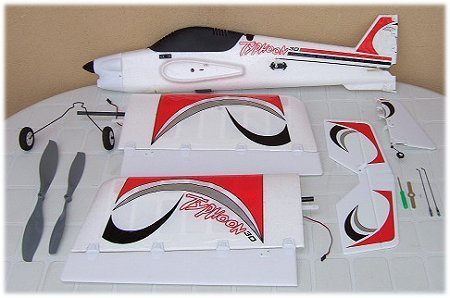
A Plug-N-Play electric rc airplane has the motor, ESC and servos installed but is missing the transmitter, receiver and motor battery pack (& charger). In other words, the airplane comes 99% assembled just like an RTF one does, but you need to supply your own transmitter, receiver and battery pack.
Above: a Plug-N-Play plane is identical to an RTF one from the outside.
Plug-N-Play radio control planes are the perfect answer for aeromodellers who want to buy and fly more than one RTF rc plane, but don't want to have a separate transmitter for each one. This makes perfect sense of course but is only realistically possible if your transmitter has multi-model memory.
Plug and Play RC airplane manufacturers
As previously mentioned the North American rc product distributor Horizon Hobby has registered the names Plug-N-Play and PNP as trademarks, and the products can be found in their popular brand lines such as ParkZone, E-flite and Hanger 9.
But in recent years there has been a huge increase in the number of manufacturers, many located in the Far East, supplying rc planes with powertrain components but without radio gear, and such aircraft are now widely available. You might also see the term Receiver Ready which is also widely used to describe plug and play airplanes.
PNP vs. BNF
You can read about Bind-N-Fly rc airplanes here, but the essential difference between PNP and BNF is that a Bind-N-Fly (also a trademark name of Horizon Hobby) plane comes with a DSM2/DSMX receiver installed. In other words, you need a compatible transmitter to fly a BNF rc airplane - namely a Spektrum or JR one.
Since a Plug-N-Play rc plane comes with no receiver installed, you are free to fit whichever Rx you prefer and so are not tied to any particular brand.
Plug and play rc planes are a great option, and with some careful shopping around for the receiver and battery pack they can be better value than a RTF package. Even better, if you already have some spare receivers and flight packs kicking about the workshop, then a PNP airplane is without doubt your cheapest option if you do want an RTF-based plane.
