
RTF RC Airplanes
- Radio Control Flying's 'Quick Fix'
In the rc flying hobby the abbreviation "RTF" stands for Ready To Fly, and such planes offer the beginner the easiest, quickest and often cheapest option for getting started in this exhilarating pastime.
Ready To Fly rc airplanes can be IC powered (internal combustion eg glow plug) or, more commonly, electric power (EP).
They can be traditional balsa/ply construction or, more commonly, foam.
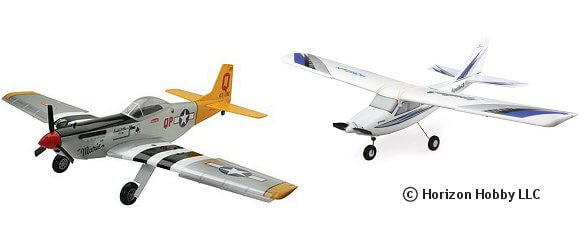
Above: a trad built RTF P-51 & a foamie trainer.
Whatever they are, RTFs need no construction or installation work done to them to get them flying. Only some very basic final assembly, such as attaching the wing to the fuselage and fixing the tailplane and landing gear in place, may need to be done by you.
Essentially, anything that makes the plane difficult to put in a box at the factory is left off for you to fit at home, otherwise the plane is complete.
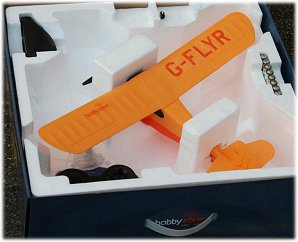 The exception to that rule are the smaller RTF rc planes such as the Ultra Micro™ ones. These are sold fully assembled because they are small enough to fit in a box.
Shown right is the HobbyZone Champ, a perfect example of a true RTF!
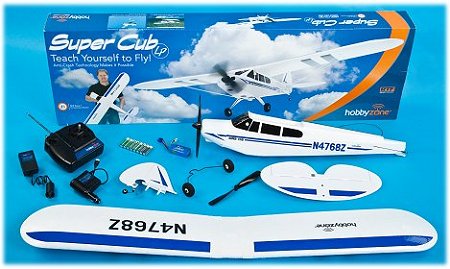
Meanwhile, the picture below shows a typical larger electric foam RTF rc plane as purchased, straight out the box. This one is the popular HobbyZone Super Cub LP (Img.©RCM&E magazine), which was one of the biggest selling trainers in its day.
The Super Cub is now discontinued, its replacement being the HobbyZone Sport Cub S RTF Product sold on Amazon. As an Amazon Associate I may receive a small commission if you buy, at no extra cost to you. Thanks for your support, it helps keep RC Airplane World alive!, which has proved to be equally as popular.
RTFs - Increasing the Pastime's Popularity Factor
RTF rc airplanes like these have introduced thousands of people to the hobby of radio control flying, as they have become increasingly so widely available, affordable and popular.
Manufacturers have been quick to catch on to this popularity, with foam EP planes ('foamies') evolving from basic high wing trainers to very advanced planes and jets with superb detailing on scale models.
Indeed, a big manufacturing advantage of foam over balsa/ply construction (other than lower production costs) is that scale detailing such as panel lines and rivets can be put in to the moulds very easily.
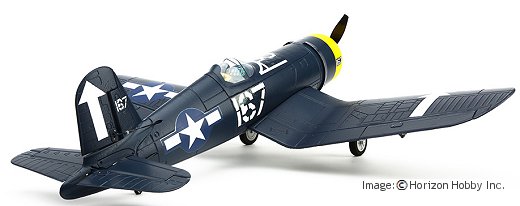
Above: Impressive RTF Corsair with good scale detail in the foam.
One downside to foam RTF rc planes is that any scale appearance is slightly ruined not only by the obvious texture of the foam surface itself, but sometimes also by the numerous injection moulding marks left behind - but neither of these things are seen when the plane is flying, and in fairness manufacturers are getting better at hiding both issues!
A second, more annnoying, downside to foam is due to its soft nature - it's easily damaged if handled carelessly. 'Hanger rash' is always an issue with foamies that are not well cared for, and if stored and handled without too much thought then it really doesn't take long for a new foam plane to start looking old and tired.
Non-foam RTF RC Airplanes
Whilst the majority of RTFs are electric powered foam planes, as previously mentioned there are also traditional balsa/ply and IC powered ones available.
Two RTF glow powered trainers have been the Alpha Trainer DSM2 and the NexStar Select 46, both shown below. Although now long discontinued, both of these trainers have taught many beginners to fly IC planes, especially at club level.
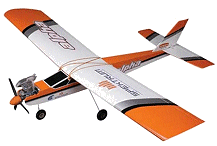
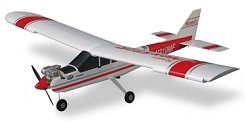
...while the Great Planes Avistar Elite, shown below, was another popular offering:
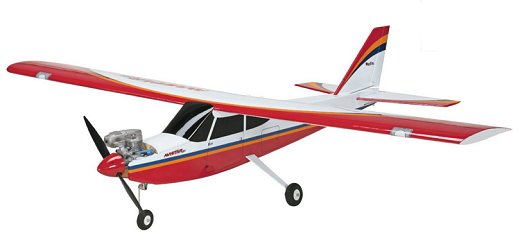
But the balsa/ply RTF market is a very limited one and if you're looking for a specific plane then you might be out of luck. The choice of ARF rc airplanes is much much larger for traditionally built model planes.
RTF Variants
While a true Ready To Fly rc plane comes complete with its own radio control system, there are some brand-specific variations on the RTF theme. The level of assembly of the airplane is the same, and the variation is with the radio side of things.
Most notable are the Bind-N-Fly™ (BNF) and Plug-N-Play™ (PNP) planes from Horizon Hobby brands ParkZone, HobbyZone and E-flite etc.
BNF aircraft come with a DSM2/DSMX compatible receiver installed so all you need is your own compatible transmitter, while PNP models come with no receiver at all - just motor, ESC and servos installed.
With PNP planes you're free to use whatever radio gear you can lay your hands on i.e you're not tied to any specific brand.
Other than the radio gear, these planes are exactly the same as RTF rc airplanes - just the price tag is different.
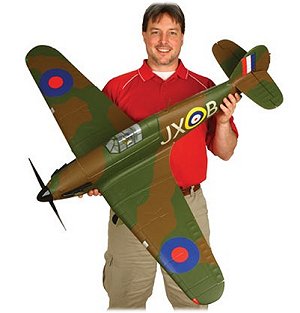
Above: the E-flite Hawker Hurricane is an example
of what's been achieved in 'readiness to fly'. RTF-based rc planes are getting
bigger and better all the time, as this superb example shows.
RIP Traditional Building?
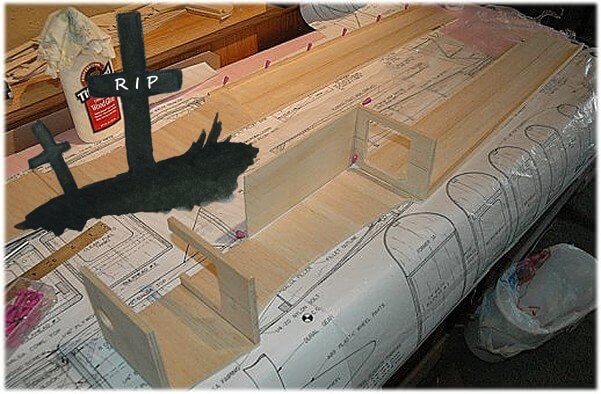
With the advent of affordable RTF rc airplanes, a noticeable but almost inevitable decline was seen in the sales of traditional built-up kits.
Of course RTFs weren't solely responsible, indeed ARF rc planes played an equal and probably larger role in the traditional kit demise.
This was to be expected because not everyone who wants to fly a radio control plane wants to build one, and the temptation to rush out and buy something that is ready to fly is hard to resist.
But it seems that more recently traditional building is making a comeback, with retailers noticing a marked increase in traditional balsa kit sales.
My line of thought here is that RTF rc planes have brought a huge number of newcomers in to the hobby over the years. Those newcomers aren't newcomers any more - they're now intermediate and experienced rc pilots who want to get in to the model building side of the hobby.
So it's probably fair to say that while RTF and ARF planes knocked the wind out of traditional building for a while, they've actually healed the wounds that they once inflicted - a strange irony there, I think. But good news for the hobby, whichever way you look at it!
Love 'em or hate 'em, RTF rc airplanes make up a huge number of aircraft across the hobby and they're here to stay.
It's fair to say that they're just getting better and better as the manufacturers learn new tricks in the ongoing effort to outsell each other.
So while an RTF can be a basic foamie trainer perfect for the complete beginner, it can also be a complex multi-channel scale aircraft that the experienced rc veteran is happy to be seen with at the flying field.
Whichever way you view them, RTF rc planes have done wonders for this hobby!
 The Beginner's Guide To Flying RC Airplanes e-book talks more about learning with an RTF plane.
